Understanding Your Vehicle’s Check Engine Light
When your check engine light comes on, it’s your vehicle’s way of telling you something isn’t working properly. While some issues may be minor, others can quickly lead to costly engine repair or major mechanical damage if ignored.
At Twin Peaks Auto Repair, we provide professional check engine light repair services for drivers in Longmont, CO and the surrounding Northern Colorado communities. Our experienced ASE certified auto technicians use advanced computer diagnostics to accurately identify the cause of your warning light and recommend the right repairs to keep your vehicle safe, reliable, and performing at its best.
Why Is My Check Engine Light On?
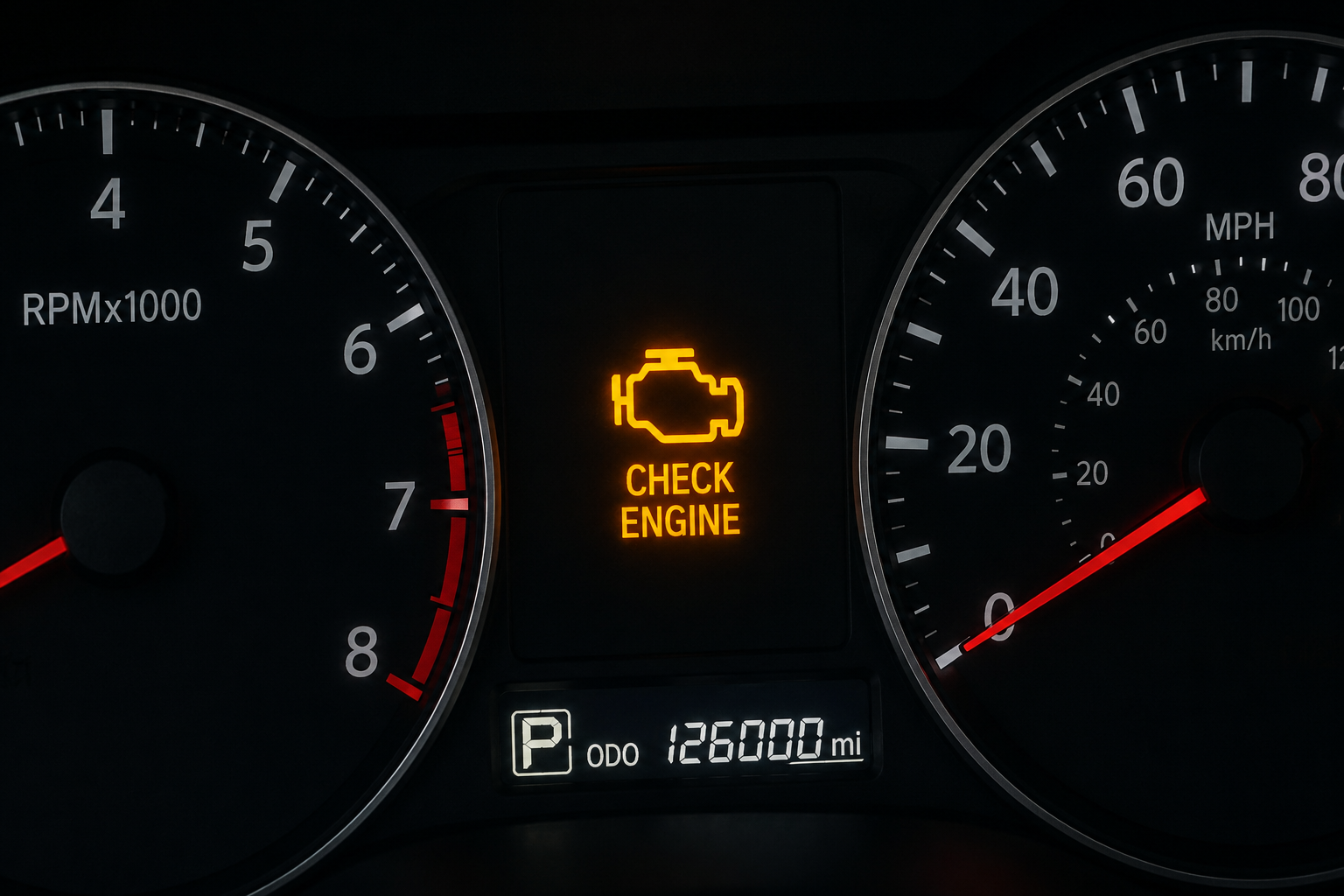
Modern vehicles are equipped with onboard computer systems that monitor engine performance and emissions. When the system detects a problem, it triggers the check engine light on your dashboard.
There are many possible reasons your check engine light may turn on, including:
- Faulty oxygen sensors
- Loose or damaged gas caps
- Ignition coil or spark plug problems
- Catalytic converter issues
- Fuel system problems
- Engine misfires
- Sensor failures
- Emissions system malfunctions
Because there are so many potential causes, it’s important to have your vehicle inspected by a trusted auto repair shop as soon as possible.
Why a Check Engine Light Needs Attention
Some drivers continue driving after the check engine light appears, assuming the problem is minor. Unfortunately, delaying service can often lead to more extensive and expensive auto repairs.
A flashing check engine light can indicate a severe fault that may damage the catalytic converter. Safely stop and seek prompt assistance if the light flashes or the vehicle runs poorly. Follow the warning instructions in your vehicle’s owner’s manual. A steady light also needs assessment, even if the vehicle seems to run normally.
Twin Peaks Auto Repair in Longmont evaluates check engine light concerns and recommends repairs based on the findings.
How Check Engine Light Diagnosis Works
Today’s vehicles rely heavily on computerized systems, which is why proper diagnostics are essential for accurate engine light repair.
Our shop uses advanced computer diagnostics equipment to retrieve trouble codes and analyze system performance. A trouble code identifies the system or condition that triggered the warning; it does not always identify the part that needs repair. This allows our ASE certified auto technicians to use the codes, symptoms and appropriate testing to investigate the cause and recommend the work your vehicle needs.
Clearing a warning light does not correct the fault that triggered it. The diagnostic findings help determine the appropriate repair.
Common Check Engine Light Repairs
Depending on the cause of the warning light, our technicians may recommend services such as:
- Spark plug replacement
- Oxygen sensor replacement
- Fuel injector service
- Ignition system repairs
- Emissions system repairs
- Sensor replacements
- Catalytic converter repair
- General engine repair services
Our technicians explain the findings and recommend the appropriate next steps for your vehicle.
Why Choose Twin Peaks Auto Repair?
Drivers throughout Longmont and Northern Colorado trust Twin Peaks Auto Repair because we combine experience, modern technology, and personalized customer service.
When you bring your vehicle to our auto repair shop, you receive:
- Experienced ASE certified auto technicians
- Accurate advanced computer diagnostics
- Honest repair recommendations
- Quality workmanship
- Friendly local service
We understand how stressful warning lights can be, and our team works hard to make the repair process as smooth and straightforward as possible.
Check Engine Light FAQs
Does a trouble code tell you which part to replace?
Not always. A trouble code identifies a system or condition that needs investigation. Different faults can produce similar codes, so the symptoms and appropriate testing help determine the cause before a repair is recommended.
Can I keep driving with the check engine light on?
A steady light still needs assessment, even if the vehicle seems to run normally. A flashing light can indicate a severe fault that may damage the catalytic converter. Safely stop and seek prompt assistance if the light flashes or the vehicle runs poorly. Follow the warning instructions in your vehicle's owner's manual; a steady light alone does not establish that it is safe to keep driving.
How much does check engine light diagnosis cost?
Diagnostic cost depends on the vehicle, its symptoms and the testing needed. Reading a trouble code may be only the first step. Request diagnostic service or contact Twin Peaks Auto Repair to discuss the concern and diagnostic charges.
What if the check-engine light comes on after refueling?
On vehicles with a removable fuel cap, an improperly secured or damaged cap can be one possible cause, but timing alone does not prove it. Follow the owner's manual and arrange diagnosis if the light persists or other symptoms occur.
Does a light that goes out by itself mean the problem is fixed?
Not necessarily. Some faults occur intermittently, and diagnostic information may remain stored after the light goes out. Tell the shop when the light appeared and whether the vehicle behaved differently so the concern can be assessed.
Should I erase codes before a diagnostic appointment?
Avoid clearing them just to turn the light off. Stored codes and operating information can help investigate the cause, while erasing information can make an intermittent fault harder to trace. Bring any code-reading results you already have.
Request Check Engine Light Diagnosis in Longmont
If your check engine light has turned on, don’t wait for the problem to get worse. Prompt diagnostics and repairs can help prevent major breakdowns and protect your vehicle’s performance.
Tell us whether the light is steady or flashing and describe any changes in how the vehicle runs. Request an appointment online or contact Twin Peaks Auto Repair to discuss diagnostic service. Our team will follow up to confirm availability.
Or call (303) 772-0035.